Support to Entrepreneurs
Why Every Startup Should Fix Conversions Before Chasing More Traffic 2025
Jump Into
Key Takeaways
- High website traffic does not always lead to more sign-ups, revenue, or business growth.
- Startups that focus on converting the right visitors see better returns than those that only chase traffic.
- Improving conversion rates saves money and supports long-term growth.
- Simple changes to landing pages, forms, and trust signals can increase conversions.
- Building a team culture that values conversion over pure traffic delivers stronger business results.
Have you ever witnessed a website suddenly attract a huge number of visitors? Maybe it got featured in a newsletter or went semi-viral on LinkedIn. The team gets excited as everyone watches the live analytics dashboard, and the number of visitors continues to rise. It’s like finally something big is happening.
But then a day goes by, then a week, and somehow nothing has really changed. Sign-ups are flat. Revenue looks the same. People came, browsed for a while and then left. And you are just left wondering, What just happened?
This happens more often than you might expect. Startups, in particular, fall into the trap of thinking that increased traffic means increased growth. It seems like a step in the right direction, yet is that all? What if traffic is just the tip of the iceberg, with the actual development yet to come?
It turns out that traffic is deceptive. It looks very attractive on a dashboard, but unless it results in desired actions such as sign-ups or buying, it is not serving the business well. As a matter of fact, it might be stealing your time, money, and energy in silence.
Here’s the wild part. The average landing page only converts 2 out of 100 visitors, but the highest-performing ones have been noted to convert above 11. That’s not just a small edge. It is an enormous growth prospect, not in going after more people, but assisting the right people to act. Given that 3 out of every five startups fail due to a lack of cash, it becomes clear why focusing on conversion could be a more sound decision.
In this blog, we’re going to explore exactly that. Why excessive traffic can stall you. How improved conversions open up sustainable growth. And the easy things that any startup can do to transform visitors into loyal customers.
1. Why Too Much Traffic Can Hurt Your Startup
Now that we have begun to doubt the possibility of more traffic always bringing more growth, let us take a closer look at something even more unexpected. What if too much traffic can actually slow your startup down?
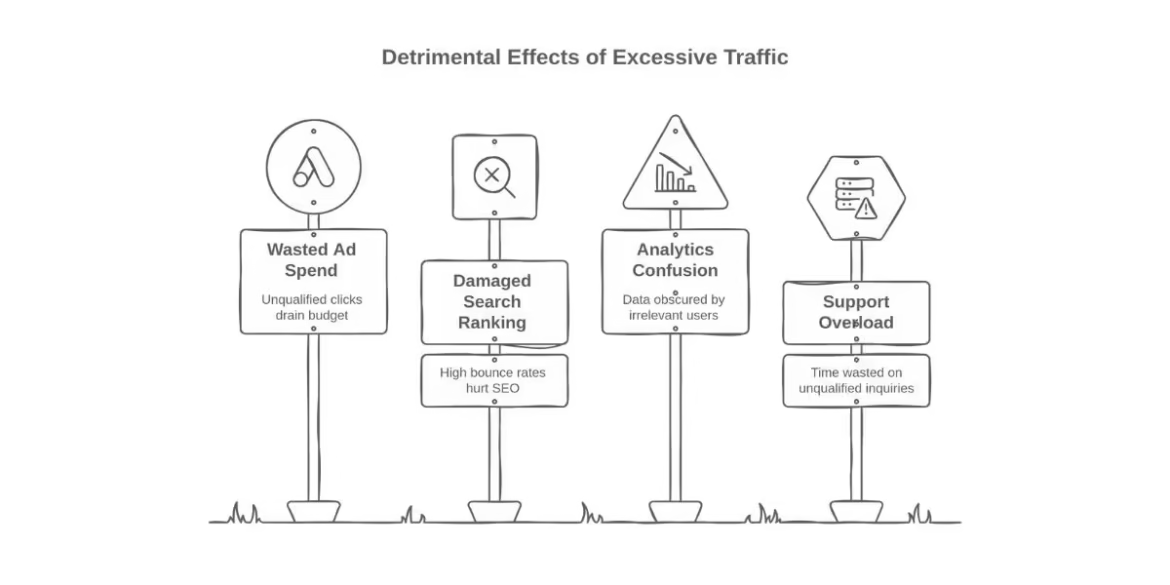
At first, it may seem counterintuitive because traffic often feels like a sign of progress. However, when the same traffic brings in the wrong individuals, it may silently drain your resources without providing anything of significance in return.
Think about it. When you pay per click and visitors aren’t on a mission to become your customers, you lose money. Such clicks accumulate quickly when working with a small-budget startup. Campaigns are triggered, advertisements are working on the surface; however, conversions are showing little to no improvement. Any dollar wasted on unqualified visitors is a missed opportunity to invest in something meaningful that could have actually contributed to growth.
The issue at hand goes beyond financial concerns. Whenever individuals visit your site and exit the site in a matter of a few seconds, this sends negative signals to search engines. Over time, this trend can affect your rankings, making it difficult for the right audience to find you. What appeared to be a growth victory begins to cause friction in the long term.
It also adds confusion. Your analytics are filled with traffic that does not reflect your real users. Support teams receive inquiries from individuals who are not intended to be customers. The result is that your team wastes time sorting through noise rather than learning from actual data.
Startup Case Example
A B2B SaaS startup selling project management tools ran a wide Google Ads campaign using generic keywords. Traffic increased by 300 percent. Trial sign-ups dropped by 80 percent. Most new visitors were students or freelancers wanting free tools. The campaign cost $50,000 but produced almost no business value.
2. How Better Conversions Save Money and Grow Value
Having witnessed the adverse effects that the wrong type of traffic can have on a startup, it is understandable to question what would have happened had we not prioritized bringing people in as much as we did, focusing instead on what they do once they get there.
Such a change can transform everything. By making conversions better, you are not fixing a broken funnel. You are enhancing the efficiency of your business. In the case of startups, that may be the difference between a burn and stable growth.
Take customer acquisition costs. When you have a higher conversion rate, you will derive more value with the same traffic. It implies you spend less to attract each customer, and you do not need to increase your marketing budget. It is one of the clever methods to expand without stretching your resources.
There is also the longer-term value to consider. When customers receive a positive experience early on, they will be eager to stay longer, upgrade and even refer other people to you. This naturally boosts customer lifetime value. Not only are you spending less to acquire customers, but you are also getting more out of each one.
That is the way startups gain actual momentum. A good ratio between what you invest to have a customer and what they will be worth in the long run gives you the capacity to reinvest and scale up without fear. And one of the quickest methods to enhance such a balance is to work on conversion.
Startups that invest in Conversion rate optimization (CRO) have huge returns. Some perceive an average of more than 200 percent. It implies that they are not only saving money, but they are positioning themselves to grow in the long term.
A high conversion rate improves both revenue and efficiency. When more of your current visitors take action, costs drop and growth becomes steady.
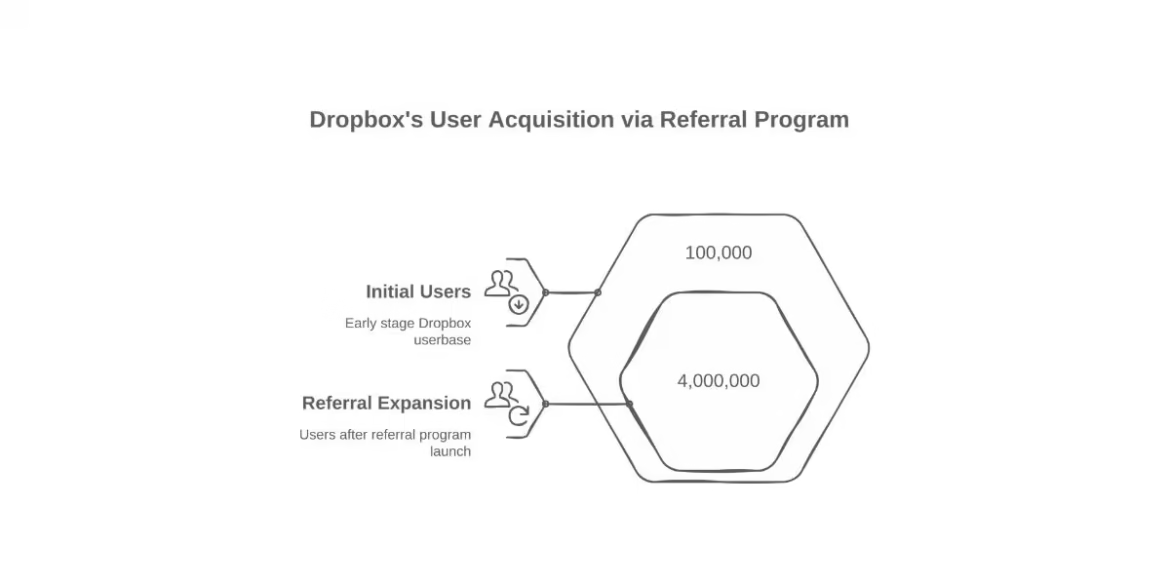
Example: Dropbox
Dropbox used a simple referral program. When a user referred someone else, both parties received extra storage space. This change increased sign-ups by 60 percent. The user base grew from 100,000 to 4 million with little ad spend.
Ways to Turn Visitors into Customers
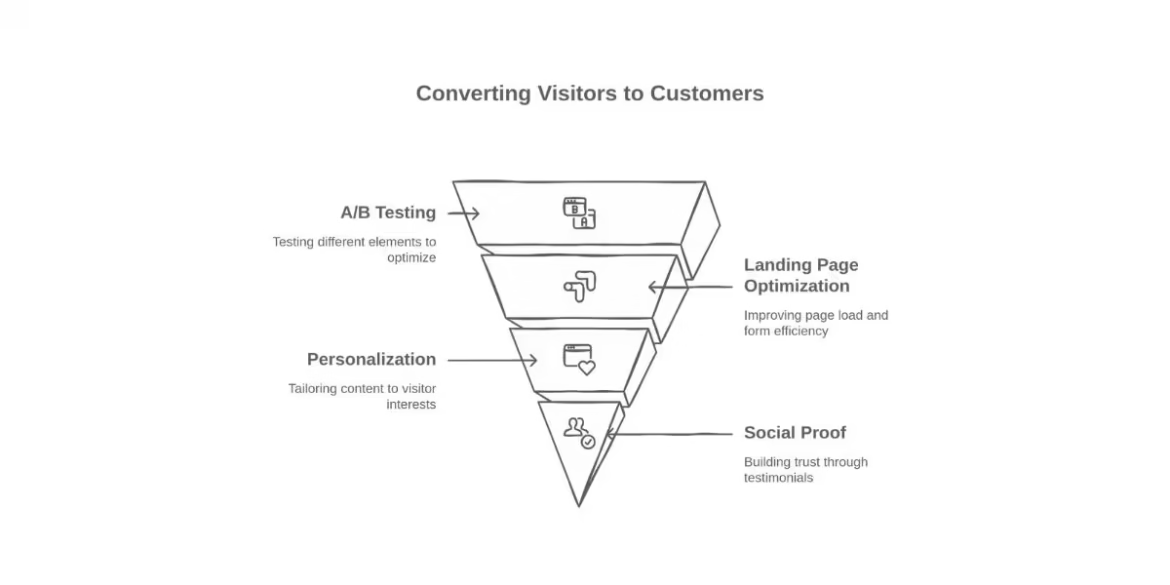
Increasing conversions can make your budget look great and improve your long-term growth, but the next thing you need to do is to understand how to make it happen. So, what can startups do today to encourage more visitors to take action?
The good news is that you do not have to use complex tools or large campaigns. Most effective methods are quite simple, and most begin with just observing what visitors see and feel when they land on your site.
- A/B and Multivariate Testing: Test headlines, buttons, and layouts. Find which versions perform best.
- Landing Page and Funnel Optimization: Make it easy for visitors to take the next step. Shorter forms and faster loading pages keep users engaged. Reducing form fields from 11 to 4 can raise conversions by 200 percent. A one-second mobile delay drops conversions by 20 percent.
- Personalization: Show content or recommendations that fit the visitor. Simple changes like using a user’s name or showing relevant products can boost revenue by up to 15 percent.
- Social Proof and Trust Signals: Show customer reviews, case studies, and security badges. These signals build confidence and help users decide.
Shopify uses these practices. Its homepage is simple. The trial sign-up process asks for only an email. This focus on clarity and quick action leads to more users.
Why Small Conversion Wins Matter
Such tiny modifications assist in converting more visitors into customers. However, what is really powerful about those changes is the way they accumulate over time. Even minor changes may not sound like much, but they can entirely change the business development perspective.
Example:
- 10,000 visitors each month
- $100 average sale
- 2% conversion rate makes $20,000 in revenue
- A 20% traffic increase gives $24,000 in revenue
- A small conversion rate increase to 2.4%, with the same traffic, also gives $24,000
Improving conversions is often cheaper than pushing for more visitors. When the conversion rate rises, every extra visitor is worth more. These gains continue over time without extra spending.
Traffic campaigns give short-term lifts. Once spending stops, so do the results. Conversion improvements stay, making growth more stable.
Traffic vs. Conversion Rate Improvements
| Method | Effort Needed | Short-Term Gains | Long-Term Gains | Cost Efficiency |
|---|---|---|---|---|
| More Traffic | High or Medium | Yes | Not unless spending continues | Usually Low |
| Better Conversion Rate | Medium | Sometimes | Yes | High |
Building a Conversion-First Culture
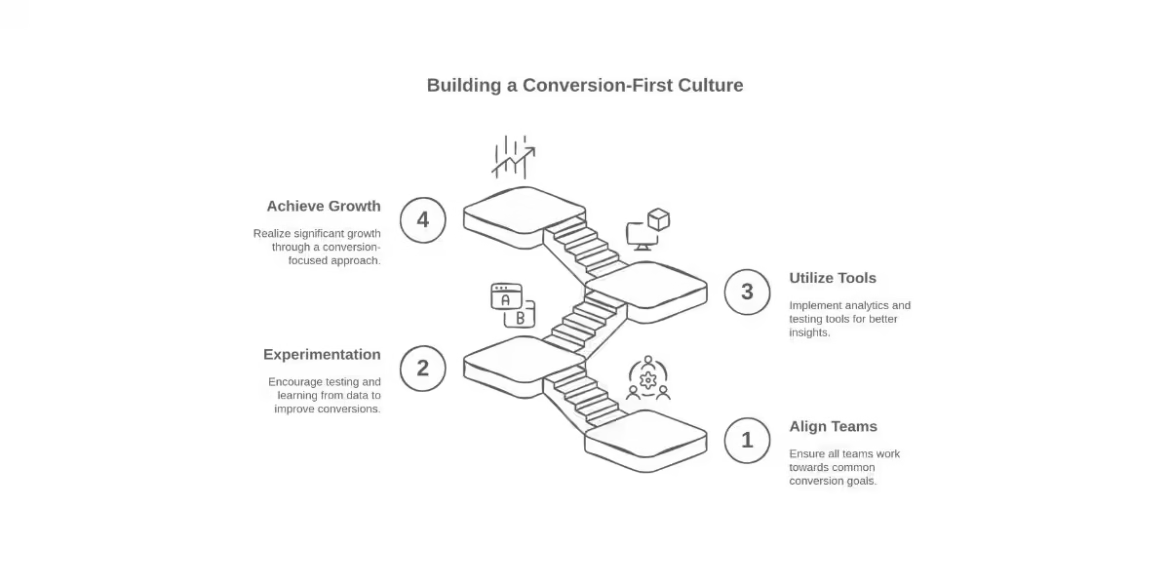
To keep improving conversions, startups need to build the right habits.
- Connect goals across teams (marketing, product, sales) to focus on one target, like trial-to-paid conversion.
- Test new ideas often.
- Use real data to learn and adjust.
- Provide the right tools.
- Use analytics, heat maps, and surveys to spot issues and make fixes.
It starts with alignment. Marketing tends to glorify metrics like traffic, sales, demos booked, and product teams counting features shipped. All metrics are essential, yet they are not the entire narrative. Once teams come together to work towards a common objective, such as trial-to-paid conversions or customer retention, all the efforts are geared towards meaningful and measurable growth.
Experimentation is equally significant. When teams are inspired to test, learn, and act on what the data tells them, conversions are enhanced. This strategy eliminates the element of guesswork and makes progress feel purposeful and gradual. Experiments are always very useful, even in the case of failure, as they introduce essential information on what the customers want.
The right tools enable this culture. There is visibility of how visitors behave and drop off with analytics platforms, heat maps, user surveys, and testing software. Having this information, one will be able to make a quick and confident improvement. Companies that utilize data in this manner are more likely to attract and retain customers in the long run.
Atlassian follows this model. Their growth model is centered around the product itself, and it is so seamless that users automatically sign up and convert. Marketing, product, and engineering are all geared towards the same direction. They grew rapidly by creating a culture of conversions and maintaining a low acquisition cost.
Conclusion
High traffic is not the same as high growth. Companies that focus on turning visitors into customers see stronger returns. Improving conversions adds value instantly and builds a lasting advantage. Small wins add up.
Make every visit count. Focus efforts on conversion, not just getting more people to your website.
FAQ
How can I tell if my traffic is low quality?
Look for high bounce rates, short time on site, and low conversions. These signs show that visitors are not interested or are not the right audience.
What are the easiest ways to increase conversions on my site?
Start by simplifying forms, speeding up page loads, and adding clear calls to action. Showing customer testimonials and reducing steps in funnels also helps.
How much can I expect my conversion rate to go up with these changes?
Results vary by site, but many startups see increases of 20 percent to over 100 percent with consistent testing and improvements.
Do I need expensive tools to improve conversions?
Most changes use basic tools. Start with free analytics, simple form builders, and manual A/B testing.
Should I focus on SEO or conversions first?
Fix conversion roadblocks first. Traffic from SEO is only valuable if your site turns visitors into leads or sales.
